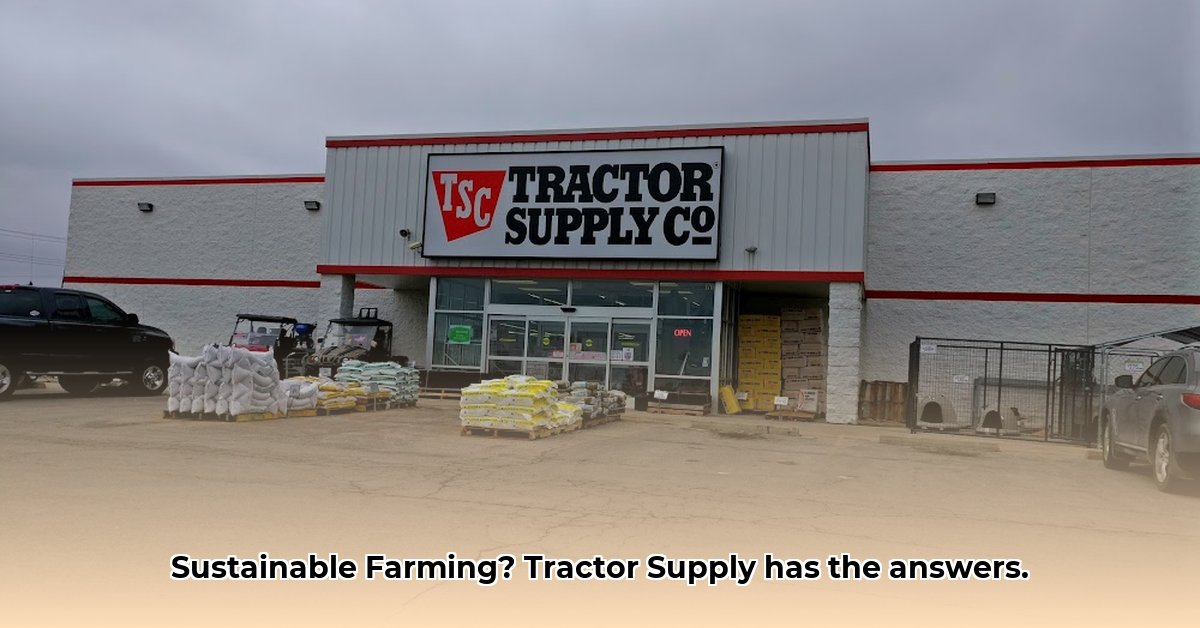
Tractor Supply (TSC) in Bolivar, Missouri, serves as a crucial link in the local agricultural ecosystem. While not explicitly marketed as a purveyor of solely sustainable products, TSC's expansive inventory offers opportunities to support eco-friendly farming practices. For information on wood-burning options, check out this resource. This article explores how TSC contributes to sustainable agriculture at a local level, highlighting areas of strength and areas needing improvement. We'll examine specific products, address the limitations of current transparency, and outline actionable steps for farmers, consumers, and TSC itself to foster a more environmentally sound future.
Tractor Supply's Product Offerings: Supporting Sustainable Practices
TSC's Bolivar location boasts a wide variety of products relevant to sustainable agriculture. A walk through the store reveals organic seeds, crucial for biodiversity and reducing reliance on chemically-intensive farming. Water-saving irrigation systems, often marketed as drip irrigation or soaker hoses (efficient water delivery to plant roots), directly combat water waste. Durable, long-lasting tools minimize the need for frequent replacements, reducing waste and lowering the overall environmental footprint. These items present concrete pathways to sustainable farming. However, a significant portion of the inventory lacks detailed information regarding sourcing and manufacturing processes, hindering informed consumer choices.
Limitations of TSC's Sustainability Efforts: The Need for Transparency
A major challenge is the absence of comprehensive labeling and information on the environmental impact of many products. For example, fertilizers, while essential, can vary greatly in their production methods and environmental consequences. Without explicit labeling, customers struggle to distinguish between options with minimal environmental impact and those with significant negative consequences. This lack of transparency undermines efforts toward genuinely sustainable consumption. Given the increasing consumer demand for transparency regarding product origins and environmental performance, TSC’s current approach presents a missed opportunity to connect with environmentally conscious buyers. How can we trust a product's sustainability claims without verification?
The Power of Consumer Choice: Driving Change Through Purchases
Despite the limitations, consumer choices at TSC exert considerable impact. Selecting organic seeds over conventional options directly supports biodiversity and reduces pesticide usage. Opting for water-efficient irrigation practices promotes resource conservation. The cumulative effect of individual decisions can significantly shift the market towards more sustainable agriculture. While the store's selection may be imperfect, consumers can influence its future by actively selecting and advocating for sustainable products. Is it not true that our collective purchasing power shapes the market?
Actionable Steps for a More Sustainable Future
Progress towards sustainable agriculture requires a collaborative effort involving TSC, local farmers, and consumers. Specific, actionable steps are crucial.
For Tractor Supply (Bolivar and Corporate):
Enhanced Product Labeling: Implement clear, detailed labeling highlighting organic certifications (like USDA Organic), fair trade practices, and sustainable sourcing. Transparency builds trust and enables informed purchasing.
Strategic Partnerships: Collaborate with local, sustainable producers to expand the availability of eco-friendly products. This supports local economies while reducing transportation emissions.
Public Sustainability Reports: Publish detailed reports outlining TSC's sustainability initiatives, goals, and progress. Transparency in reporting fosters accountability and strengthens consumer trust.
For Local Farmers and Gardeners:
Embrace Sustainable Practices: Research and adopt sustainable farming techniques, including cover cropping (protecting soil health), crop rotation (improving soil fertility), and integrated pest management (reducing pesticide needs).
Advocate for Change: Communicate the need for more sustainable options at TSC. Provide constructive feedback, suggesting specific products or improvements.
Source Locally: Prioritize purchasing supplies from local businesses committed to sustainable practices. This supports local economies and reduces environmental impact of long-distance transportation.
For Consumers:
Informed Purchasing: Carefully examine product labels, seeking out organic certifications and sustainable sourcing information. Don't hesitate to ask staff questions about product origins and environmental impact.
Feedback and Advocacy: Contact TSC directly to express your preference for greater transparency and a wider selection of sustainable products. Voice your support for sustainable practices online.
Reduce Waste: Practice waste reduction by minimizing packaging and composting or recycling organic matter. Choose products with minimal packaging whenever possible.
Conclusion: Cultivating a Greener Future Together
While TSC's role in promoting sustainable agriculture isn't fully realized, the potential exists for significant positive change. By working collaboratively – with increased transparency from TSC, informed consumer choices, and the adoption of sustainable practices by local farmers – Bolivar's agricultural community can move toward a more environmentally responsible and resilient future. The path forward requires collective action, creating a greener tomorrow, one seed, one purchase, and one conversation at a time.